

Global Postural Reeducation (GPR / RPG) in Lisbon, Almada and Oeiras
GPR (RPG) sessions backed by biomechanical analysis: we measure your posture, correct the pattern and measure again, with physiotherapists and doctors under one roof.
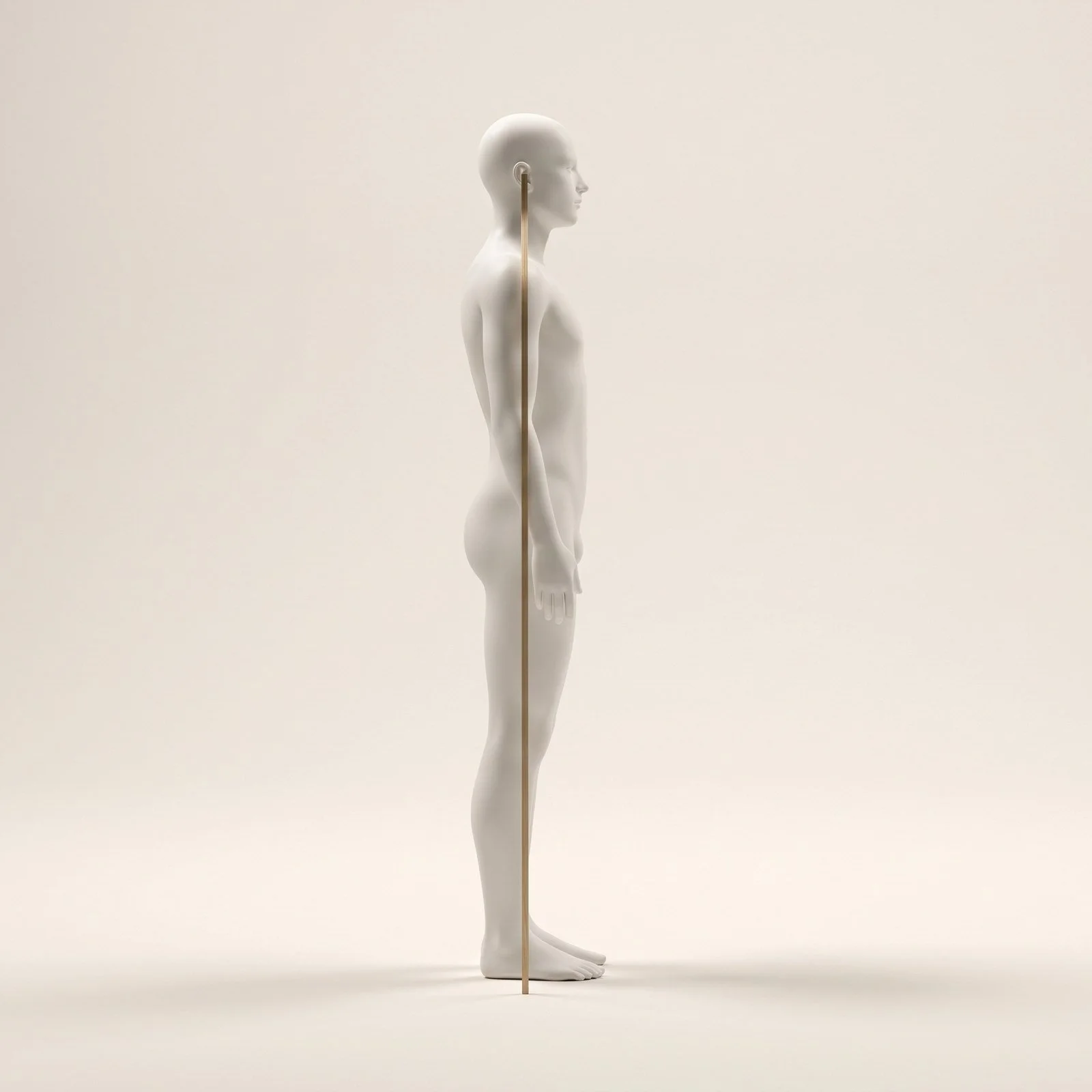
Postural reeducation, measured rather than eyeballed
Global postural reeducation (GPR, known in Portugal as RPG) starts from a simple idea: the body works in muscle chains, and a change in one place shows up elsewhere. At Myalgia Clinic we offer GPR sessions with one difference: before we correct, we measure.
Biomechanical analysis shows which pattern is present, how far it is from what is expected and whether it is changing with treatment.
Last reviewed: November 2026 · Dr. Miguel Reis e Silva, Sports Medicine (OM 52856)
What is global postural reeducation?
GPR was created by the French physiotherapist Philippe Souchard. It works on posture through sustained, active whole-body positions in which several muscle chains are lengthened and activated at the same time, with breathing control and corrections from the physiotherapist.
Studies show benefit for chronic low back and neck pain and for mobility, similar to other well-guided exercise programmes. That is why, at Myalgia, GPR sessions are part of a plan that combines postural reeducation with strengthening and movement training, which is what keeps the correction in everyday life.
To learn more about the method, read Global postural re-education: what it is and what it is for.
The four postural patterns we correct
Posture is not only how you stand still. It is also how your body organises itself when it moves. In the assessment we look mainly for four patterns:
Forward head and rounded shoulders
The head sits in front of the shoulder line and the shoulders roll inwards. Linked to neck pain, tension headaches and shoulder pain. Learn more
Thoracic hyperkyphosis
An increased curve of the upper back, the "rounded back". It limits overhead arm movement and loads the neck and shoulders. Learn more
Lumbar hyperlordosis
An increased lower-back curve, often with the pelvis tilted forward. It can be linked to low back pain when standing, arching or training. Learn more
Dynamic knee valgus
When you squat, jump or run, the thigh turns in, the knee drops inwards and the ankle collapses into pronation. Linked to pain at the front of the knee and overuse injuries. Learn more
How we measure posture
Judging posture by eye is unreliable: two observers rarely agree and small changes go unnoticed. We use advanced biomechanical analysis systems to turn posture into numbers:
From the side (sagittal plane): craniovertebral angle, shoulder position relative to the plumb line, thoracic and lumbar curves, pelvic tilt.
From the front (frontal plane): hip, knee and foot alignment in the single-leg squat, the step-down and the jump landing.
In motion: treadmill walking and running, with high-speed video and sensors.
At the foot: 3D scanning and loading assessment, when the foot is part of the problem.
The same tests are repeated throughout the programme, so you can see in your own numbers whether the correction is happening. Learn more about our Movement Analysis Lab.
KINESTA
The founders of Myalgia Clinic created KINESTA, a biomechanical analysis app that objectively measures the squat, single-leg step-down, jump, gait and running. At Myalgia we use it to compare each reassessment with the previous one and to give you a clear report you can understand.
How the postural reeducation programme works
Biomechanical assessment — clinical history, physical examination and measurement of posture and movement. You leave knowing which pattern you have and what we will work on.
One-to-one 60-minute GPR sessions — active whole-body global postural reeducation postures, manual therapy when it helps and movement-control training with real-time biofeedback.
Strength and control — we strengthen the muscles that hold the correction (back extensors, shoulder-blade muscles, glutes, foot muscles), in the gym or with clinical Pilates.
Reassessment — we repeat the same tests and adjust the plan.
When pain is severe, radiating or not improving, the first step is a medical consultation to find the cause.
Shoulder Pacemaker
For the shoulder and shoulder blade we also use the Shoulder Pacemaker, a neuromuscular stimulator worn during exercise. A motion sensor detects the arm position and activates, at the right moment of the movement, the muscles that stabilise the shoulder blade and rotate the shoulder outwards. It was developed to retrain shoulder muscle-activation patterns and, in a multicentre randomised trial in functional shoulder instability, physiotherapy with the Shoulder Pacemaker achieved better results than physiotherapy alone. Learn more
Who postural reeducation is for
For people who spend many hours sitting or at a computer, for those who train and want to move better, for teenagers with postural changes and for anyone with neck, back, shoulder or knee pain related to the way they move. You do not need to be an athlete: our approach was born in sport, but it is for everyone.
When posture is not the cause
Not all pain comes from posture. Pain that wakes you at night, that travels into the arms or legs with tingling or weakness, unexplained weight loss, or pain after a fall should be assessed by a doctor before any exercise programme. In teenagers with scoliosis, medical assessment always comes first.
Where we offer postural reeducation
Myalgia Clinic Lisbon — Rua Adelaide Cabete 7A, Quinta da Luz, Carnide. See the clinic
Myalgia Clinic Almada — Rua Luís de Queiroz 5A, Almada town centre. See the clinic
Myalgia Center Miraflores — physiotherapy centre at Avenida das Túlipas 18A, Algés (Oeiras). See the centre
Frequently asked questions about GPR and postural reeducation
What does RPG stand for?
RPG is the Portuguese and French acronym for Global Postural Reeducation (GPR), a physiotherapy method created by Philippe Souchard that works on posture through active whole-body positions. At Myalgia we offer GPR sessions combined with biomechanical analysis and strength training.
GPR, Pilates or physiotherapy: which should I choose?
All three work on posture in different ways. GPR postures lengthen and activate muscle chains; clinical Pilates trains trunk control with dynamic exercise; therapeutic exercise builds strength. In practice we combine them according to what the assessment shows.
How many sessions will I need?
It depends on the pattern and how long it has been there. We reassess with the same tests to decide whether to continue, adjust or finish. Keeping the gains requires continuing the exercises at home.
Can posture be corrected in adults?
Mobility, strength and movement control improve at any age. Curves with bony changes change less, but even then the goal, less pain and better function, is achievable.
Does bad posture cause pain?
Not always. Some people have marked curves and no pain, and vice versa. Posture is one factor, which is why we measure and look for the pattern that relates to your complaint rather than correcting numbers for their own sake.
Do I need to see a doctor first?
No. You can start with the physiotherapy assessment. If there are warning signs or pain that does not improve, we refer you to a medical consultation in the same clinic.
Does GPR help with scoliosis?
It can improve posture, mobility and pain in mild scoliosis. In larger curves, especially in growing teenagers, specialist medical assessment is needed.
How much does it cost?
Prices are on the booking page. We are a private clinic; most health insurance plans with reimbursement refund part of the cost. See health insurance and reimbursements.