
Low back pain treatment: personalised physiotherapy for pain relief
For anyone looking for low back pain treatment in Lisbon, personalised physiotherapy is an effective, safe solution adapted to each person's needs.
Low back pain is one of the most common complaints in adulthood and can affect quality of life, work performance and general wellbeing. According to the World Health Organization, low back pain is one of the leading causes of disability worldwide, affecting hundreds of millions of people.
In this article, we explain the causes, symptoms and most effective approaches to treating low back pain, focusing on current strategies used by experienced physiotherapists in Lisbon.

What is low back pain?
Low back pain refers to pain in the lower back, between the lowest ribs and the buttocks. It can range from mild discomfort to intense, disabling pain.
It can be:
Acute: lasting less than 6 weeks, often linked to strain or a sudden movement.
Subacute: lasting 6 to 12 weeks, a transitional phase.
Chronic: persisting for more than 12 weeks, requiring a more structured treatment approach.
Distinguishing between these types matters when choosing the most appropriate treatment plan. Chronic low back pain in particular benefits from treatment that goes beyond symptom control, addressing the biomechanical, postural and functional factors that keep the pain going.
Low back pain: the most common symptoms
Recognising the symptoms is the first step towards effective treatment. The most common signs include:
pain in the lower back, constant or intermittent
muscle stiffness, especially in the morning or after inactivity
difficulty moving, bending or lifting things
pain radiating down the leg (sciatica), which may indicate nerve involvement
tingling or numbness in the legs
Important: if low back pain comes with loss of bladder or bowel control, progressive weakness in the legs or severe night pain that won't ease, seek urgent medical attention. These signs may indicate a condition that needs immediate treatment.
If symptoms persist for more than two weeks without improvement, it is advisable to have an assessment by a qualified health professional to agree on the right strategy.
Main causes of low back pain
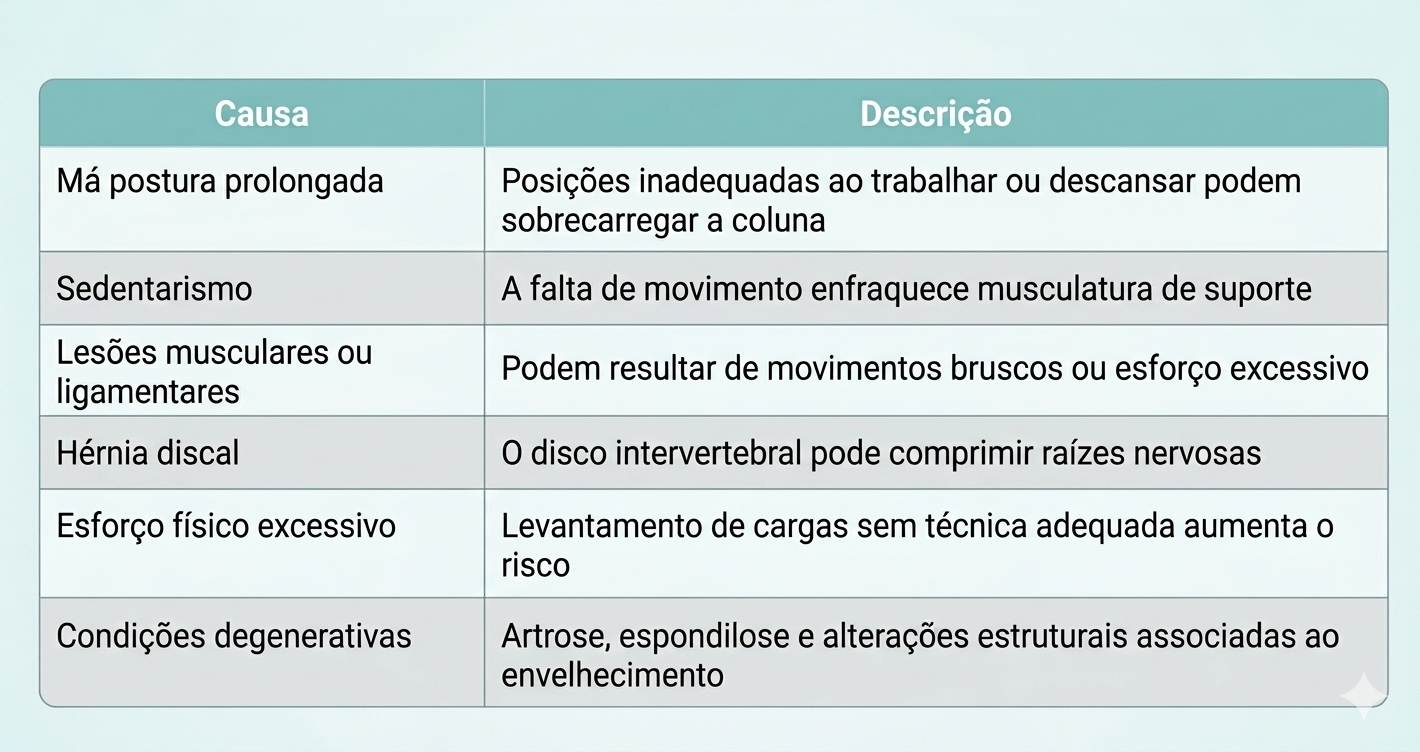
Low back pain can have several origins. Understanding the likely cause helps guide treatment more effectively.
Physiotherapy for low back pain: how does it work?
Physiotherapy is one of the most recommended approaches for low back pain, because it addresses the source of the problem and not just the symptom. Unlike medication alone, which tends to give temporary relief, physiotherapy aims to improve function, movement control and tolerance to load, while also reducing the likelihood of recurrence.
Personalised assessment
The process begins with a detailed assessment by a qualified physiotherapist. This stage is crucial, because the plan depends on an accurate functional diagnosis.
The assessment may include:
postural analysis standing still and in motion
assessment of joint and muscle mobility
identification of the pain pattern and aggravating factors
functional tests and, when indicated, biomechanical movement analysis
Based on the results, an individual treatment plan is drawn up, with clear goals and a structured progression.
The most effective treatment methods
Physiotherapy for low back pain combines complementary techniques, tailored to each person's clinical profile.
1. Manual therapy
Joint mobilisations and soft-tissue techniques can help reduce pain, improve mobility and ease stiffness. They are often useful for joint locking and stiffness after exertion or injury.
2. Therapeutic exercise
This is the cornerstone of low back rehabilitation. The focus is on motor control, stability and progressive strengthening, including the deep stabilising muscles such as transversus abdominis and multifidus.
3. Guided stretching
Helps reduce stiffness and improve mobility, especially when the posterior muscle chains are tight. With the right technique, it adds range and comfort to movement.
4. Postural re-education
Important for reducing recurrence. Global Postural Re-education (GPR) and other movement re-education approaches help correct the loading patterns and habits that keep low back pain going.
A personalised rehabilitation plan
An effective plan must be adapted to each person's needs, lifestyle and functional goals. It generally includes:
regular physiotherapy sessions, with frequency set by the stage of treatment
exercises to continue at home between sessions
periodic reviews with planned adjustments
advice on ergonomics and daily habits
gradual progression of load, with a focus on safety and independence
Consistency is key. People who follow the plan consistently tend to get better results and fewer recurrences.
When to consider other treatments?
In some cases, physiotherapy can be complemented by other treatments, always under medical guidance, especially when there is persistent pain, significant limitation or a specific diagnosis.
Image-guided procedures
In cases linked to disc herniation, facet joint osteoarthritis or sacroiliac inflammation, image-guided procedures such as injections can reduce pain and make rehabilitation easier, acting as a "therapeutic window" that lets the physiotherapy programme move forward.
Radiofrequency for chronic low back pain
In some cases of chronic low back pain that has not responded to conservative treatment, radiofrequency can be a minimally invasive option to reduce pain signals from the facet joints, with benefits that may last several months.
In complex cases, combining pain medicine and physiotherapy can provide a complete approach, pairing pain control with functional recovery.
The physiotherapist's experience: a decisive factor
Choosing a qualified professional has a direct impact on the outcome. An experienced physiotherapist can:
distinguish the likely sources of low back pain and risk patterns
select techniques suited to the stage and your tolerance
structure safe, measurable progressions
guide prevention and education to reduce relapses
When looking for services in Lisbon, it is advisable to choose clinics with certified professionals and an evidence-based approach.
Reliable medical references
For up-to-date clinical information on low back pain and its treatment, see official sources such as:
Frequently asked questions
What causes low back pain?
It may be linked to posture, a sedentary lifestyle, muscle or ligament injuries, disc herniation and degenerative changes. It often results from a combination of factors.
Does physiotherapy help low back pain?
Yes. Physiotherapy is one of the most effective and safest conservative approaches to treating and preventing low back pain, with consistent scientific support.
How long does treatment take?
It depends on the cause and how long you've had symptoms. In acute cases, many people improve within 2 to 4 weeks. In chronic cases, follow-up may continue for several months, with gradual progression.
Can low back pain be prevented?
Yes. Regular exercise, core strengthening, good ergonomics at work, mobility and sensible load management reduce the risk of recurrence.
Book your appointment
If you're looking for low back pain treatment in Lisbon, don't ignore your body's signals. Early treatment can shorten the episode and help you return safely to your daily activities.
Contact Clínica Myalgia and start your personalised rehabilitation plan, supported by a team specialising in musculoskeletal pain.
This article and its content have been reviewed by Dr Miguel Reis e Silva, Medical Director of Sport Lisboa e Benfica, specialist in Physical and Rehabilitation Medicine, and specialist in Sports Medicine and Pain Medicine at Clínica Myalgia.