

Ultrasound-guided procedures
Image-guided procedures — precision, safety and effectiveness
Image-guided procedures are minimally invasive techniques in which ultrasound (or, in selected cases, fluoroscopy) guides the placement of the treatment in real time — a medication, a biological concentrate or an intervention on a nerve — at the exact site of the pain or injury.
The difference from a "blind" injection is simple: with imaging, the doctor sees the needle and the target structure throughout the procedure. Without imaging, they rely only on external landmarks. At Clínica Myalgia®, no invasive procedure is performed without image guidance — it is a house rule, with the following benefits:
✔️ Exact placement of the treatment, confirmed in real time
✔️ Lower risk of hitting nerves, blood vessels and other sensitive structures
✔️ Greater effectiveness and more consistent results
✔️ Quicker, more comfortable procedures
These techniques are indicated for conditions such as osteoarthritis, persistent tendinopathies, bursitis, plantar fasciitis, low back and neck pain, and painful shoulder, knee and hip syndromes. And they never stand alone: at Myalgia, each procedure is part of a plan that also treats the cause of the problem — through physiotherapy, movement analysis and biomechanical correction.
What do we do?
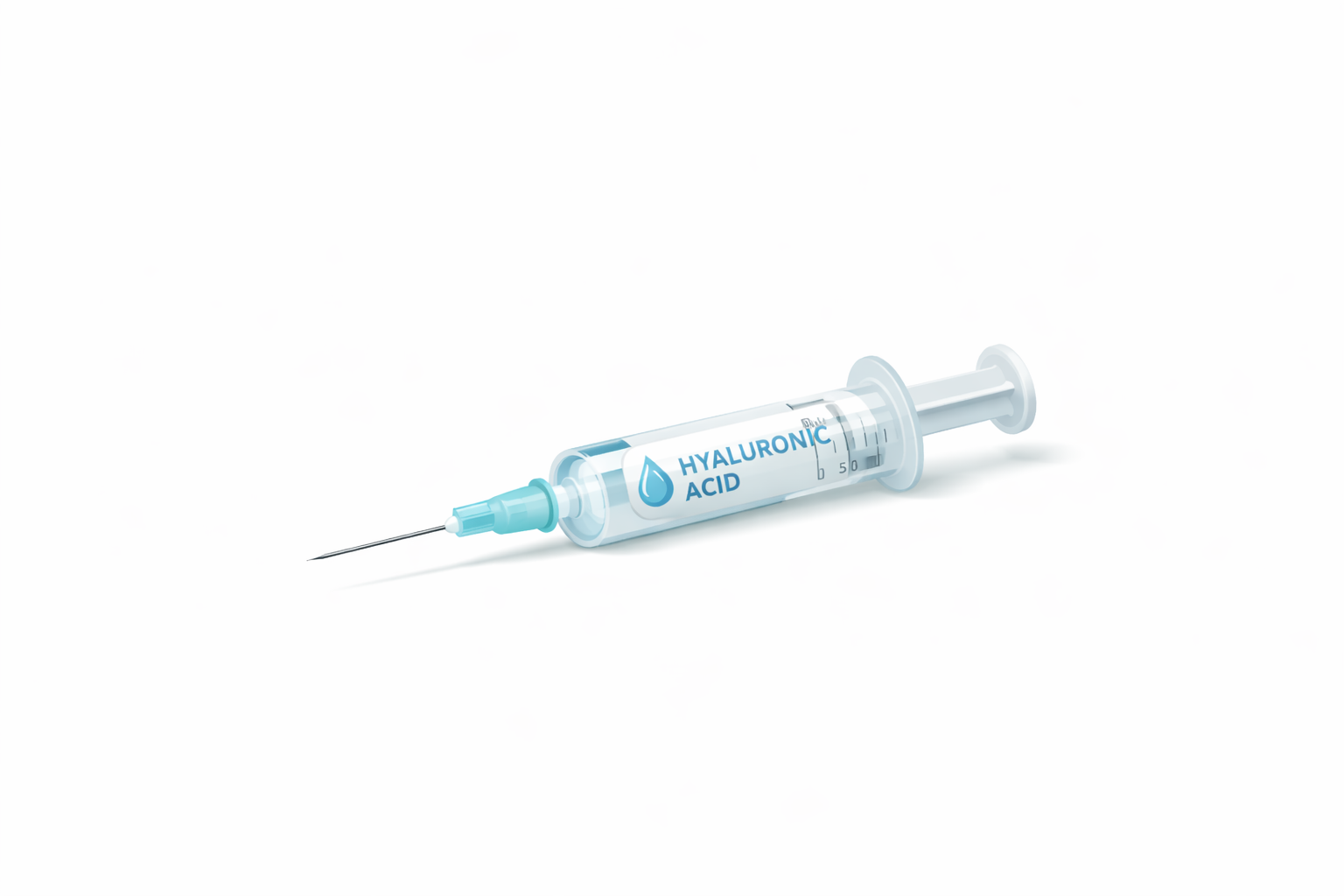
Hyaluronic acid injection (viscosupplementation)
Restoring the joint's natural "lubricant" to reduce the pain and stiffness of osteoarthritis, or applied around tendons in hydrodilatation. The effect usually lasts several months.
USES: Osteoarthritis of the knee, hip, shoulder and ankle; tendinopathies.
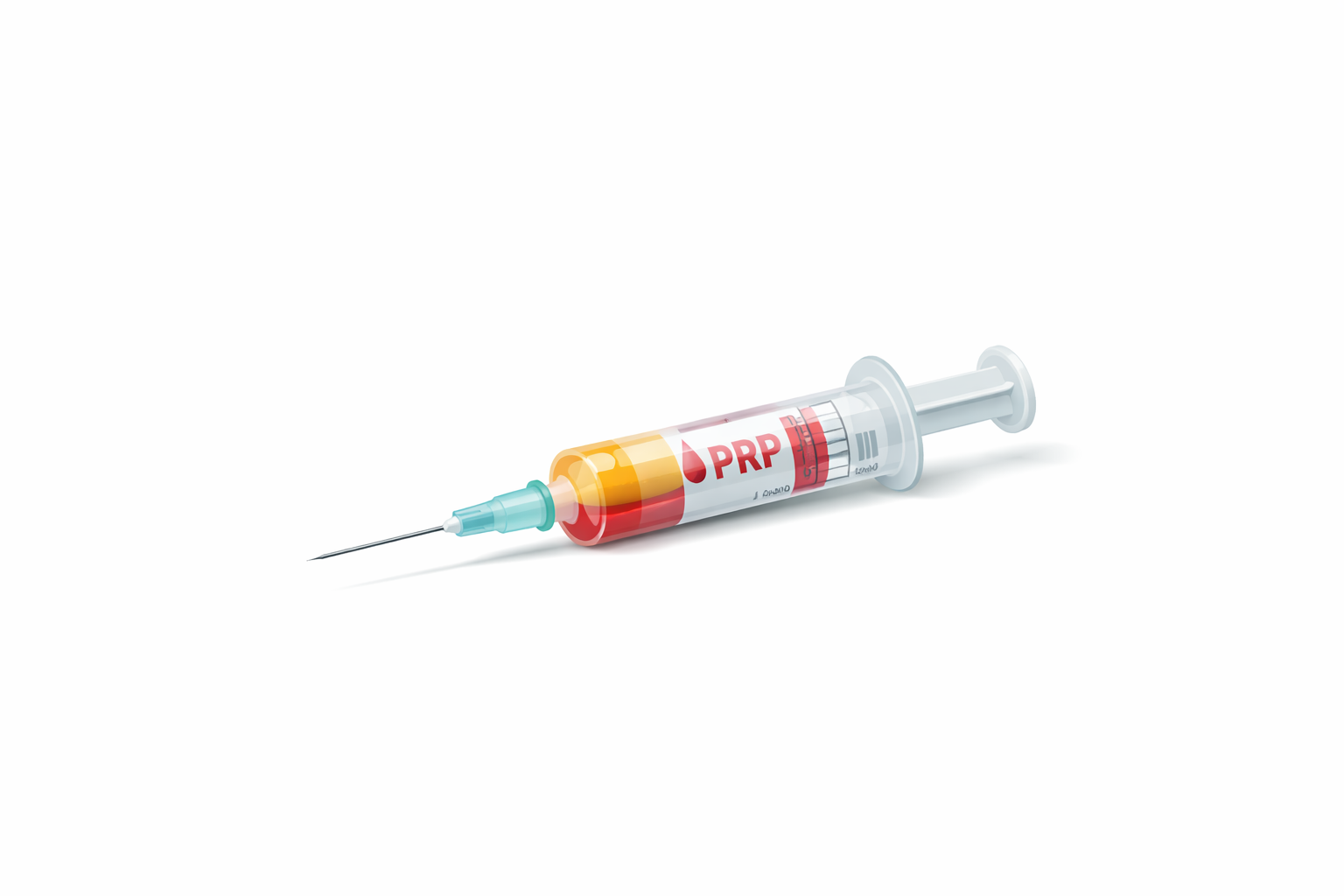
Platelet-rich plasma (growth factor) injection
A platelet concentrate obtained from your own blood, injected into the injury site to stimulate the body's natural tissue-repair mechanisms.
USES: Tendinopathies; osteoarthritis; muscle injuries; plantar fasciitis.
Anti-inflammatory injection
Delivering anti-inflammatory drugs directly to the exact site of inflammation, with a faster, more targeted effect than oral medication — and without its systemic burden.
USES: Bursitis; inflammatory arthritis; chronic inflammatory conditions.
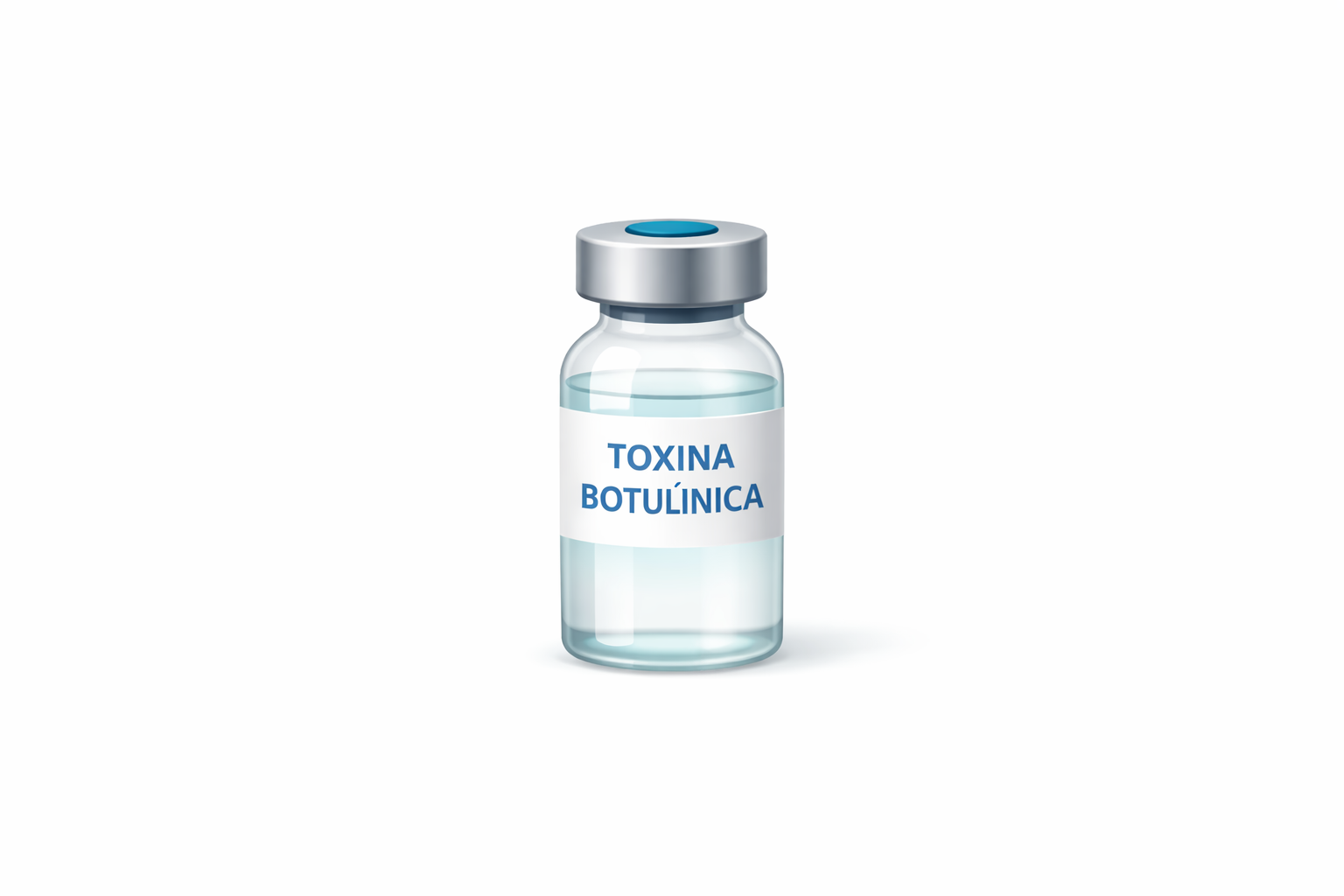
Botulinum toxin injection
Targeted muscle relaxation, with ultrasound-guided precision, to resolve muscle-related pain, muscle–nerve entrapment or specific biomechanical problems.
USES: Spasticity; piriformis syndrome; plantar fasciitis; bunion (hallux valgus); popliteal artery entrapment syndrome.

Tendon hydrodilatation
A high-volume peritendinous injection of saline that separates the tendon from the surrounding tissues, breaking the cycle of friction and inflammation.
USES: Persistent tendinopathies (Achilles, patellar, shoulder).
Arthrosamid
A non-absorbable hydrogel for knee osteoarthritis: a single ultrasound-guided injection designed for long-lasting pain relief. An option for people who have had limited benefit from other injections or want to delay surgery.
USES: Osteoarthritis that has not responded to other treatments.


Peripheral nerve blocks
An injection of local anaesthetic next to a specific nerve — for diagnosis (confirming the source of pain) or treatment.
USES: Low back pain from facet joint arthropathy; neuropathies; nerve compressions; complex regional pain syndromes.
Peripheral nerve radiofrequency
Modulating pain transmission with an electrical current applied next to the nerve responsible, for longer-lasting relief.
USES: Any condition that improved but relapsed after a peripheral nerve block.
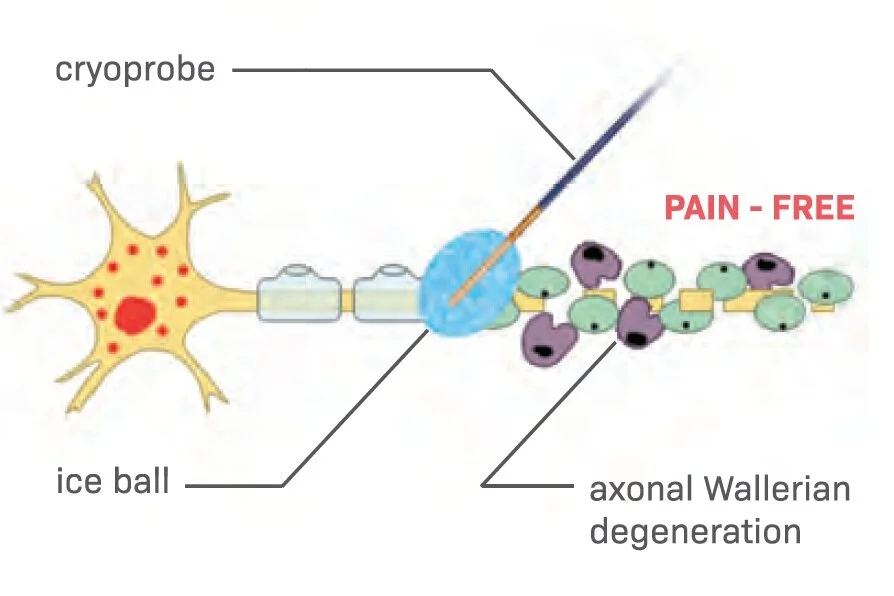
Peripheral nerve cryoablation
One of the latest innovations in pain treatment: controlled cooling of the nerve temporarily interrupts pain transmission, with gradual recovery of function.
USES: Any condition that improved but relapsed after a peripheral nerve block.
Frequently asked questions
Do the procedures hurt?
They are usually well tolerated. We use local anaesthetic whenever indicated, and ultrasound guidance makes the technique more precise and comfortable, reducing the risk of hitting sensitive structures.
What is the difference between an ultrasound-guided injection and a "normal" injection?
In an ultrasound-guided injection, the doctor sees the needle and the target structure in real time, ensuring the treatment is placed exactly where it is effective. Without imaging, placement relies only on external anatomical landmarks — with a higher failure rate and greater risk to nearby structures.
How do I know which procedure is right for me?
You don't — and you don't need to. It all starts with a medical assessment, including a physical examination and ultrasound: that is where we decide whether a procedure is indicated, which one, and how it fits into your treatment plan. Often the right answer combines a procedure with physiotherapy and biomechanical correction.
How long is recovery?
It depends on the procedure and on your individual response, but in most cases normal activity resumes the same day or within a few days. At the end of the procedure you receive specific guidance for your case.
Do I need a medical referral to book?
No. You can book an assessment directly in Lisbon or Almada — bringing any imaging you have already had done.